


 +1 617 404 2125


Everything You Need To Know About Nyepi


BY Jess Leak
6 days ago


If you’re planning to visit Bali in the month of March, you may have heard of Nyepi Day or ‘Silence Day’. Still not sure exactly what it entails? Don’t worry, we're here to tell you all about the celebration and the Nyepi do’s and don’ts!
Whatever you do, don’t let it discourage you from visiting Bali at this time of year - being here during the Nyepi celebrations is actually an amazing opportunity to experience the real Balinese culture!
For more trip-planning ideas before or after the observance, browse our guide to Bali’s top places to visit.

So what actually is Nyepi? Nypei is a very sacred and important Hindu holiday (Hinduism is the predominant religion in Bali, making up 90% of the population - Islam and Christianity make up the majority of the other 10%).
Nyepi marks the beginning of the Balinese New Year and is made up of 5 days of celebration. On the third day of celebrations is Nyepi Day - a day of silence.
Our Top Trending Tours
-
All-Inclusive
-
All-Inclusive
-
All-Inclusive
When is Nyepi in Bali?
Nyepi follows the Balinese Saka calendar, so its date shifts on the Gregorian calendar from year to year. It often falls in March, but do not plan around a fixed March date or reuse a date from an older guide. Before booking flights or accommodation, confirm the date for your travel year with your airline, accommodation provider, and current local announcements. The main observance is a 24-hour period, commonly from 6 a.m. on Nyepi to 6 a.m. the next day; follow the timing and directions published for that year and your local area.
If you are arranging a longer stay, allow room in your itinerary for the day before and after Nyepi, as transport and business hours may change around the observance. Our Bali itinerary and trip-length guide can help you leave space for slower days, while the Bali travel guide is a starting point for planning the rest of your visit.
This day of the festivities is for Hindu Balinese to connect more with God. Throughout the day people meditate, pray and fast in order to reflect and consider their values. The whole island closes down for this day of solitude, including the airport.
There will be no lights or candles, no cars, motorbikes or people on the roads and no one on the beaches. The shut down for Nyepi begins at 6am and does not end until 6am the following day.
The sacred week has many rituals before and after Nyepi. The day before being most noticeable for travelers. The Bhuta Yajna Ritual is performed during this time, where negative elements are vanquished to create a balance with God, Mankind and Nature.
At sunset the ritual of pengerupukan begins, where Hindu Balinese parade the streets with Ogoh Ogoh’s and play instruments very loudly in order to scare the evil spirits. Ogoh Ogoh’s are large demonic looking statues which are symbolic of evil spirits. The parade eventually comes to an end with the ceremonial burning of the Ogoh Ogoh’s to banish the evil spirits.
Rituals leading up to the Day of Silence
Nyepi is part of a wider religious period, and the schedule and public events can differ among traditional villages (desa adat). In the days beforehand, some communities hold Melasti ceremonies, in which sacred objects are taken to water for purification. On the eve of Nyepi, Pengrupukan and Ogoh-ogoh processions may take place. These are community religious observances, not staged shows, and access, routes, and photography expectations are set locally.
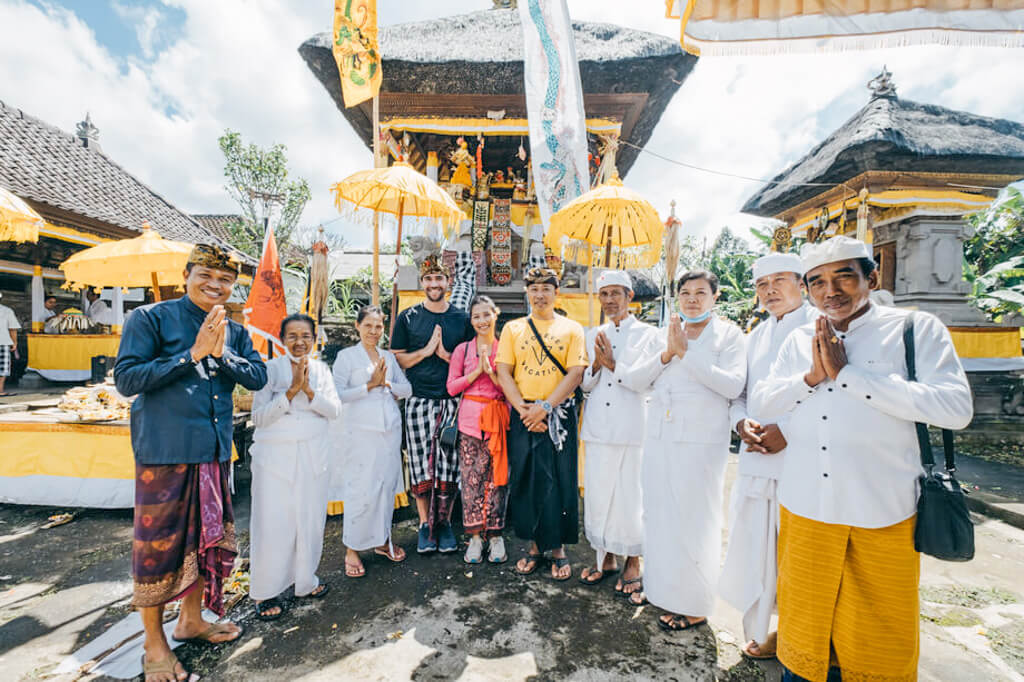
If you are invited to observe a ceremony, ask your host where visitors may stand, dress modestly, keep pathways clear, and follow instructions from the community. Avoid touching offerings or sacred objects, using flash near worshippers, or stepping into a procession for a photo. For background on sacred water sites, see our guide to Balinese water temples and their traditions; our overview of Bali’s famous temples offers more context on visiting religious sites respectfully. On a different day, travelers interested in everyday traditions can explore local crafts through this Balinese village and culture experience.

The following morning begins Nyepi, a day of absolute silence and self reflection. Typically, Hindu Balinese stay at home during this time. It is spent in meditation or praying to shrines at home. After Nyepi, is the Hindu Balinese New Years Day where families visit one another and ask for forgiveness before starting the new year.
So what does this mean for you on Nyepi Day? Here are some things to be mindful of…
Stay inside for the 24 hours of Nyepi Day. All people will stay inside and all shops will be closed (emergency services will be actively working but all movement will be kept to a minimum where possible). Local police will be patrolling the streets to ensure this is adhered to.
Visit an ATM or money exchange the day before Nyepi if you need cash - these will be shut down until late in the day post Nyepi.
Arrange your food for the day - talk to your concierge as some villas/hotels will arrange meals in advance or you can stock up at a local supermarket.
Our Best Selling Bali Tour
- All-Inclusive
- Bali Sekumpul & Aling Aling Waterfall Tour(2 Reviews)
Looking for a tour in Bali to show you the best of the island’s natural beauty? The Sekumpul & Aling Aling Waterfall Tour tour takes you to some of the most b...
US$129/pp Learn more

Nyepi preparation checklist for visitors
Make the day part of your travel plan before you arrive. Ask your accommodation what services it will provide during Nyepi, whether meals need to be arranged in advance, and what its guidance is for guests. Confirm your check-in and check-out plans as well as airport transfers well before the observance. Bali’s airport closes for Nyepi, and normal ground transport is not available during the observance; do not schedule a flight, ferry connection, or road transfer during that period. Check directly with your airline and transport operator for the exact dates and service changes.
- Arrive with time to settle in: Plan to be at your accommodation before the observance begins. Ask the property to confirm the applicable local start and end times.
- Prepare essentials: Arrange any needed food, drinking water, medications, cash, and other necessities in advance. Shops, restaurants, ATMs, and other services may close, so do not rely on last-minute errands.
- Plan transport outside the observance: Discuss transfers and any pre-Nyepi travel with your accommodation. If you need help coordinating your wider island route, read our practical guide to getting around Bali with a private driver.
- Consider your travel needs: Guests with mobility, health, childcare, or other support needs should speak with their accommodation ahead of time and confirm what assistance is available during the quiet period.
Use your remaining days to explore at a comfortable pace rather than trying to squeeze in distant stops immediately before the shutdown. These guides to popular places in Bali and quieter Bali experiences can help you choose an itinerary that fits your stay. If you are travelling alone, our Bali solo travel guide includes additional planning advice.
The four main rules to be respectful of…
No working. Similar to other public holidays, all businesses are required to close for 24 hours. But in Bali this really does mean ALL businesses (with the exception of local police and emergency services). This is a great time to relax by the pool without the temptation of leaving your villa.
No lights. This means no electricity or lighting of fires. As a tourist there is a little bit of leeway here, but only use light when it’s really necessary and make sure you keep curtains closed. Don’t worry your hotel/villa will still have electricity for you to charge your devices and keep cool in the air-con.
No entertainment or pleasure. Local TV stations will be switched off and mobile data services may be slow or limited. Your hotel/villa wifi should still be working though - plus there are many other offline activities you can enjoy like reading a book or floating in the pool!
No traveling. No planes will arrive or depart from Bali during Nyepi Day. There will be no cars or scooters on the road and not even anyone on foot so take this opportunity to slow down and relax!

Nyepi is a beautiful day where you will wake up in the morning to complete silence. You won’t hear the rumbling of a motorbike, or tooting of a car horn. It’s a day where the island paradise of Bali stops as one and observes this sacred ritual of stillness. Enjoy!
What to expect during Nyepi
Visitors who are in Bali during Nyepi are expected to remain inside their accommodation and observe the quiet. Public movement and activities are restricted, the airport is closed, and businesses generally pause. Local customary authorities (pecalang) help uphold observance in their communities. Follow your accommodation’s instructions and the rules announced locally; do not go to the beach, walk around to take photographs, or attempt to travel between properties. Emergency arrangements are handled through local authorities and your accommodation, so ask in advance whom to contact if you need urgent help.
Lighting and sound should be kept to a minimum, especially where they are visible or audible outside. Ask your accommodation what it expects of guests, since facilities and services differ by property. Wi-Fi, meals, air conditioning, and other hotel services may be available, but confirm rather than assume. Download maps, tickets, and important information beforehand, charge devices, and bring a book or another quiet activity. The stillness can be a memorable part of a Bali trip when visitors allow local communities to observe the day on their own terms.
Nyepi visitor FAQs
What is Nyepi, and why is it observed in Bali?
Nyepi is the Balinese Hindu New Year, marked by a 24-hour Day of Silence for prayer, fasting, meditation, and reflection. The island pauses routine activity so people can focus on spiritual renewal. It’s part of a wider period of ceremonies that includes community rituals before and after the day itself.
When does Nyepi take place, and how long does it last?
Nyepi follows the Balinese Saka calendar, so its Gregorian date changes each year. It often falls in March, but check the date for your travel year with your accommodation, airline, and local announcements. The main observance commonly runs from 6 a.m. on Nyepi to 6 a.m. the next day; confirm the local timing.
What happens before Nyepi, and can visitors watch the ceremonies?
Some communities hold Melasti purification ceremonies in the days beforehand. On the eve of Nyepi, Pengrupukan rituals and Ogoh-ogoh processions may take place, featuring large symbolic figures and music. These are religious community observances, and customs vary by village. If you watch, ask your host where visitors may stand, dress modestly, keep pathways clear, and follow local guidance.
Can visitors leave their hotel or travel around Bali during Nyepi?
Visitors should remain inside their accommodation for the observance. Routine movement is restricted, Bali’s airport closes, and road travel is unavailable. Don’t schedule a flight, ferry connection, airport transfer, or trip between properties during Nyepi. Check with your airline, transport operator, and accommodation about the exact date and any changes around it.
What should I arrange before Nyepi begins?
Plan to arrive and settle in before the observance. Ask your accommodation about meals, staff support, electricity, Wi-Fi, and its guest instructions. Arrange food, water, medications, cash, and other essentials in advance, since shops, restaurants, and ATMs may close. Confirm check-in, check-out, and transport plans early, and download important maps or travel information beforehand.
What should guests do to observe Nyepi respectfully?
Stay at your accommodation, keep noise and visible light low, and follow instructions from your host and local authorities. Avoid going outside to take photos or visiting beaches. Hotel services vary, so ask what will be available and whom to contact in an emergency. Quiet indoor activities such as reading can help you enjoy the stillness while allowing the community to observe Nyepi. To learn about Balinese culture beyond the observance, explore our guide to Balinese crafts and souvenirs and continue planning with ForeverVacation’s Bali destination guide.
Recommended Articles


Get your VACATION on!
Expertly curated emails packed full of vacation inspiration, travel tips and more!