+1 617 404 2125
Field Museum





Search



| 📌 Address | 1400 S Lake Shore Dr, Chicago, IL 60605, USA |
| ⏰ Opening Hours | 9:00 AM - 5:00 PM |
| 💸 Entrance Fee | Free |

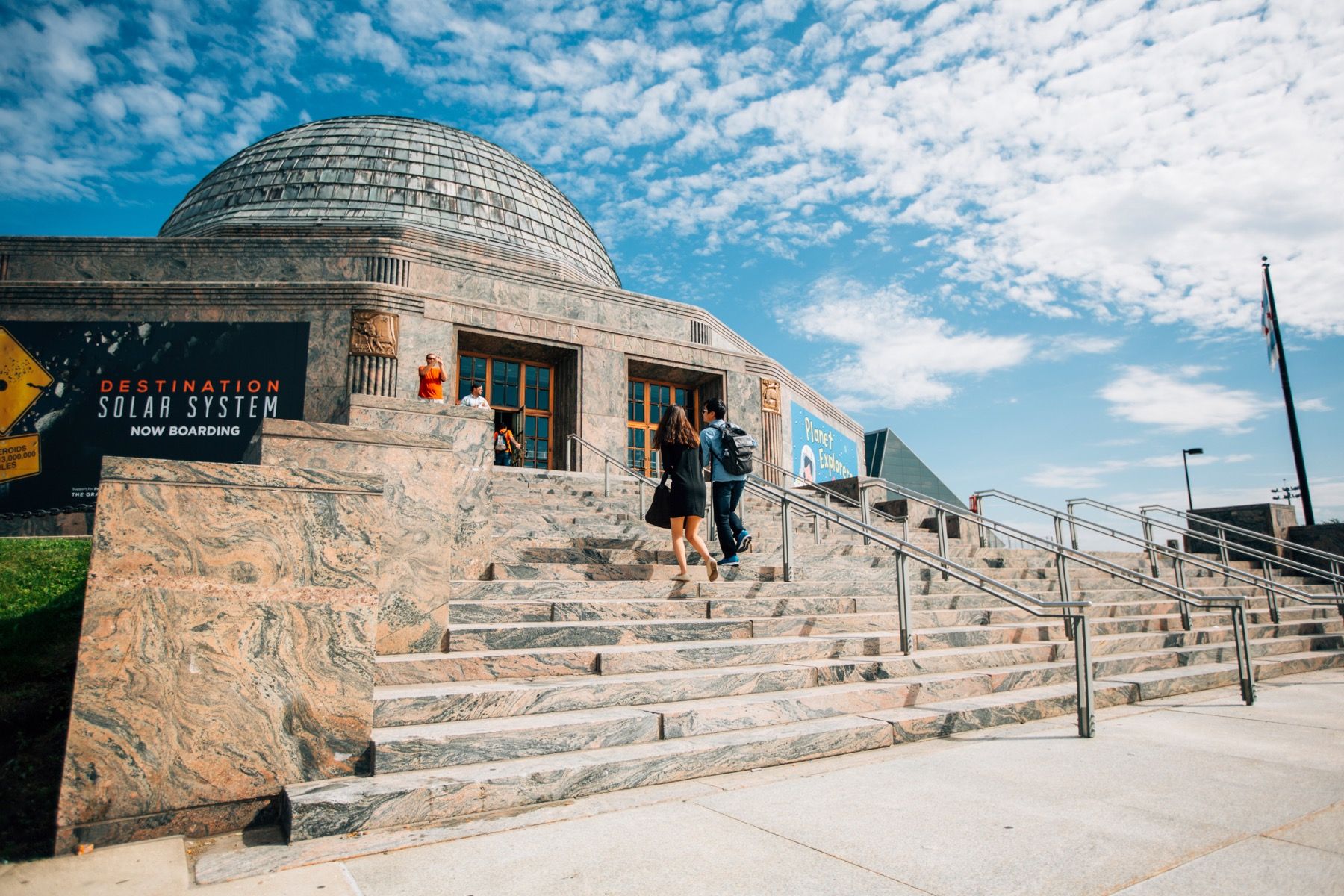
The Field Museum is a crown jewel among Chicago’s rich tapestry of cultural institutions, standing proudly on the Museum Campus along with other iconic venues such as the Adler Planetarium and Shedd Aquarium. It's a place where history and science converge, telling the story of life on Earth through its vast collection of exhibits. Inside its walls, you'll find everything from ancient fossils to cutting-edge DNA research.
From Sue, the largest and most complete Tyrannosaurus rex ever discovered, to stunning dioramas of wildlife, there is a labyrinth of knowledge waiting to be explored at every turn. It's not just a museum; it's a sanctuary for the curious, a hub for explorers, and a treasure trove for learning.

Discover the stunning architecture that made Chicago famous on this fun and informative walking tour through the historic Loop District! Explore iconic skyscrap...
The Field Museum was originally established as part of the Columbian Museum of Chicago in 1893, in the wake of the World's Columbian Exposition. Its founding mission was to accumulate and disseminate knowledge, and preserve and exhibit objects illustrating art, archaeology, science, and history. By 1905, the museum was renamed in honor of its first major benefactor, Marshall Field, a prominent Chicago businessman.
Over the years, the Field Museum has been a site of groundbreaking scientific research and major expeditions, adding to its treasure trove of over 24 million specimens and artifacts. The museum's storied past intertwines with the history of Chicago, surviving the Great Chicago Fire and serving as an educational beacon, even during the city's tumultuous times.
The importance of the Field Museum lies in its role as a custodian of history and a leader in scientific research. It safeguards priceless artifacts and specimens, some of which are integral pieces of the global puzzle of our planet's history. The museum also serves as a public learning institution, fostering wonder and understanding about the natural world and our place within it.
By providing access to its immense collection, the Field Museum helps educate millions of visitors each year. It also plays a critical part as a research institution, contributing to significant scientific discoveries. The cultural and academic impacts of the Field Museum make it an indispensable resource for anyone looking to grasp the natural wonders of our world.
When you set foot in the Field Museum, the possibilities for discovery are endless. Witness the grandeur of the Grainger Hall of Gems, which dazzles with its array of precious stones and rare jewels. Or immerse yourself in the Ancient Egypt exhibit, where you can explore a recreation of a three-story tomb complex.
One of the most mesmerizing sights is the hall of dinosaurs, crowned by Sue, the T. rex—the star of the show. Another highlight includes the Evolving Planet exhibit, which takes you on a journey through 4 billion years of life on Earth, showcasing everything from single-celled organisms to the giants of the Cretaceous period.
Family-friendly interactive exhibits, such as the Crown Family PlayLab, cater to young learners, inspiring the next generation of scientists and historians. And don't forget to visit the museum's temporary exhibitions, which are constantly refreshed to bring new and engaging topics to the public eye.



| 📌 Address | 1400 S Lake Shore Dr, Chicago, IL 60605, USA |
| ⏰ Opening Hours | 9:00 AM - 5:00 PM |
| 💸 Entrance Fee | Free |
The Field Museum in Chicago is known for its extensive natural history collections, which include millions of specimens across a range of disciplines such as anthropology, botany, geology, paleontology, and zoology. It is also famous for displaying Sue, the most complete and best-preserved Tyrannosaurus rex fossil.
The Field Museum offers various admission fees depending on age, residency, and the type of access you want (basic admission or all-access). They also provide free days for Illinois residents throughout the year.
Yes, the Field Museum offers guided tours for visitors. These tours can provide a more in-depth understanding of the exhibits and are conducted by knowledgeable staff members or volunteers.
The Field Museum typically opens from 9 AM to 5 PM, with the last admission at 4 PM. However, hours may vary on holidays or due to special events, so it's recommended to check the museum's official website for the most current information.
The Field Museum is located on Chicago's Museum Campus near Lake Michigan. It is accessible by public transportation, including several bus lines and the Metra train. Additionally, there is parking available nearby for visitors traveling by car.