


 +1 617 404 2125


Ultimate Guide to Bali’s Best Night Markets (2026 Edition)

BY Jess Leak
7 months ago


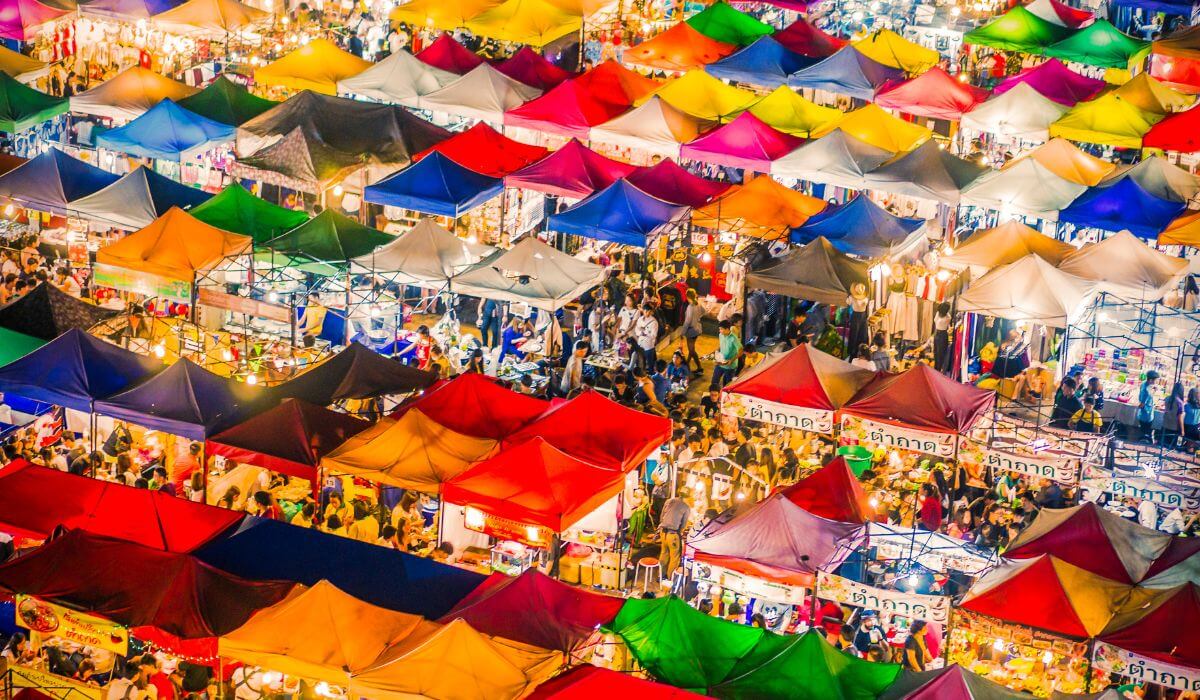
Bali’s night markets ignite after sunset in a way no beach club or rooftop bar can match. The moment the day’s heat breaks, hundreds of pop-up stalls snap open, woks hiss, and fluorescent lights flicker on, turning otherwise quiet streets into moving rivers of people, aromas, and bargaining banter. The pull is primal: a chance to eat well, shop cheap, and mingle with locals in one shot.
These markets aren’t tourist side-shows—they’re the island’s original food courts and community hubs. Families come for dinner because nasi campur for four costs less than a single café latte in Canggu. Teenagers meet up to trade the latest phone cases and TikTok dance moves. Vendors, often third-generation, pass down recipes for sate lilit and serombotan like heirlooms. That constant churn of regulars keeps quality honest: a stall survives only if its babi guling sells out nightly. If you time it right, you can even roll a sunset Uluwatu Kecak Dance half-day tour into the evening, then head straight for a sizzling plate of sate when the markets light up.
Our Best Selling Tour
- All-Inclusive
- Bali Instagram Tour: The Most Famous Spots(3,462 Reviews)
From famous rice terraces, stunning waterfalls and breathtaking views of Mount Agung, our Bali Instagram Tour is perfect for travelers who want to experience th...
US$109/pp Learn more

2026 brings a cleaner, better-organised scene without dulling the chaos. Gianyar Night Market, gutted by a 2016 fire, finished its full facelift this year—wider aisles, improved drainage, and designated waste zones mean you can wander without wading through grease puddles. Sindhu Night Market in Sanur added hand-wash stations and stricter food-safety checks, answering the only real gripe travellers had: hygiene. Across the island, newly painted stall numbers and QR-code menus make it easier to shout out your favourites on social.
Why go tonight?
- Authentic eats for loose change: Average dish IDR 15 k (≈ US $1).
- Late-night shopping: Batik scarves, knock-off tees, and silver rings run until midnight.
- Zero formal dress code: Flip-flops welcome; mosquito repellent smart.
- Cultural immersion on a plate: Every bite tells a regional story, from spicy sambal matah to smoky grilled corn.
- Photo ops that pop: Neon bulbs + sizzling skewers = Instagram gold, no filter.
Hit a pasar malam once and you’ll understand why locals skip air-conditioned malls for the raw, unedited nightlife that still owns the streets of Bali.
Quick-View Cheat-Sheet: Bali’s Top Night Markets
Market (Area) | Daily Hours | Crowd Sweet-Spot | Must-Try Bite |
Gianyar Night Market (Ubud Market area) | 4 pm – 11 pm | 6-8 pm | Babi guling platter |
Sindhu Night Market (Sanur) | 5 pm – 10 pm | 6-7 pm | Sate lilit |
Kuta Art Market (Kuta) | 8 am – 10 pm — night vibe after sunset | 6-9 pm | Nasi goreng & beach souvenirs |
Badung Night Market (Denpasar) | Day market 5 am-5 pm; food court lights up 6 pm-late | 7-9 pm | “Sate Godzilla” skewers |
Kreneng Night Market (Denpasar) | 24 hrs; street-food zone after 6 pm | 7-10 pm | Bakso & babi guling |
Jimbaran Fish Market (Kedonganan) | 6 am – 9 pm | 5-8 pm (sunset grills) | Ikan bakar (grilled snapper) |
Garlic Lane / Legian Market (Legian) | 6 am – 11 pm | 7-9 pm Fri-Sun | Bakso meatball soup |
Taman Sari Night Market (Kerobokan) | 5 am – 12 am | After 7 pm | Satay ayam skewers |
Pasar Senggol (Nusa Dua) | Dinner show 6 pm – 10 pm | 6:30-8:30 pm | Balinese buffet & dance |
Klungkung Senggol Market (Klungkung) | 3 pm – 10 pm | 6-8 pm | Lamb satay & tipat tofu |
The 10 Must-Visit Night Markets
One-stop snapshots of Bali’s most rewarding pasar malam—when to go, what to eat, and the vibe you’ll walk into.
1. Gianyar Night Market (Ubud Market area)
- Hours: 4 pm – 11 pm, seven days.
- Scene: The island’s biggest market, now on a wider, repaved lane after relocating across the road in late 2024.
- Eat first: Crackling babi guling and smoky satay—queue moves fast because whole pigs are carved to order.
- Pro tip: Skip parking headaches—grab a GoJek from Ubud for about 25 k IDR.
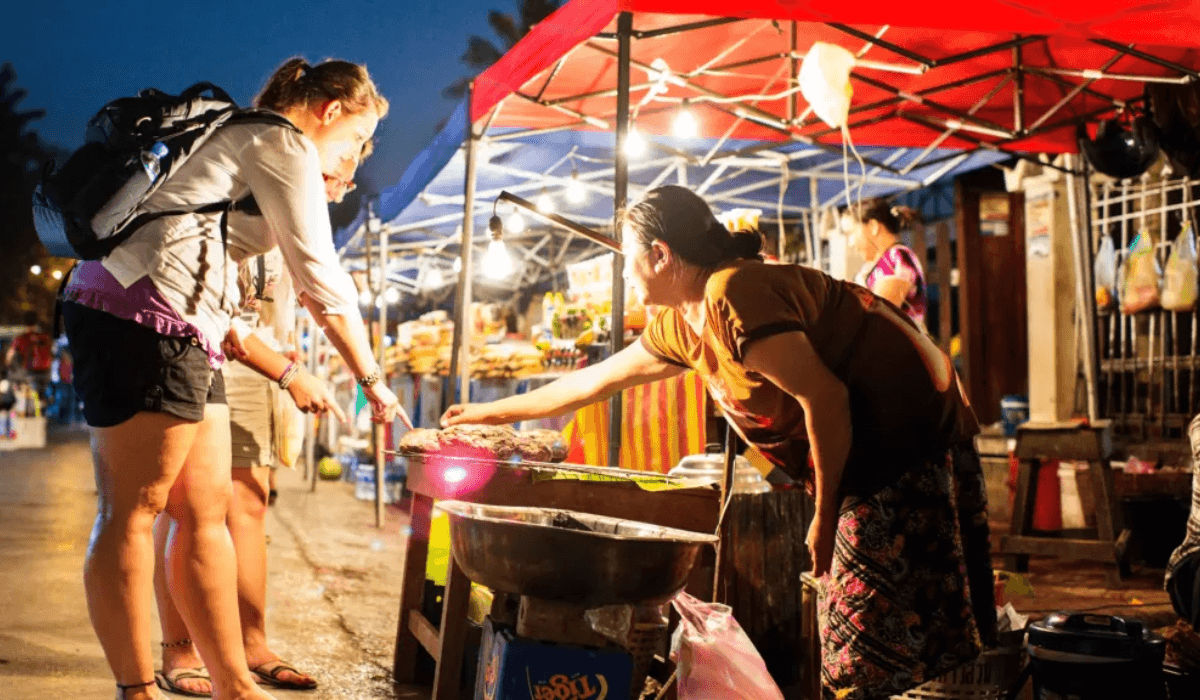
Gianyar Night Market sits 10 km east of Ubud, and in 2024 it slid literally across the road into a cleaner space with tiled walkways—goodbye ankle-deep puddles, hello elbow room. By 4 p.m. the first woks fire up, fluorescent bulbs buzz on, and Jalan Ngurah Rai morphs from sleepy artery to riot of neon, motorbike horns, and bargaining banter.
Spend the afternoon dodging cheeky macaques on an Ultimate Monkey Forest Tour, then come hungry after 6 p.m.—that’s when trays are freshest but queues still sane. Head for the babi guling stall (look for the turning spit) or grab a lemongrass-skewered sate lilit, then chase it with a bowl of steaming bakso if you need something hot. Prices hover around IDR 15 k a plate, so bring small bills; vendors don’t haggle on food. The easiest move is a 20-minute GoJek ride from Ubud—parking costs more than a noodle bowl and fills fast. Wrap up around 10 p.m. before the best bits sell out, pocket the change, and let the chilli-smoke perfume follow you back to the hotel.
While you're in the Ubud area for the night market, consider spending the day exploring the Ubud Art Market, the Ubud Palace, and the Campuhan Ridge Walk — all within easy walking distance of each other.
Our Top Trending Tours
-
All-Inclusive

-
All-Inclusive

-
All-Inclusive

2. Sindhu Night Market (Sanur)
- Hours: 5 pm – 10 pm; peak 6–7 pm.
- Scene: Compact, well-lit lanes, free entry, hand-wash stations at each corner.
- Eat first: Sate lilit sticks (fish & lemongrass) straight off the charcoal.
- Pro tip: Vendors close early on full-moon ceremony nights—check the Balinese calendar.
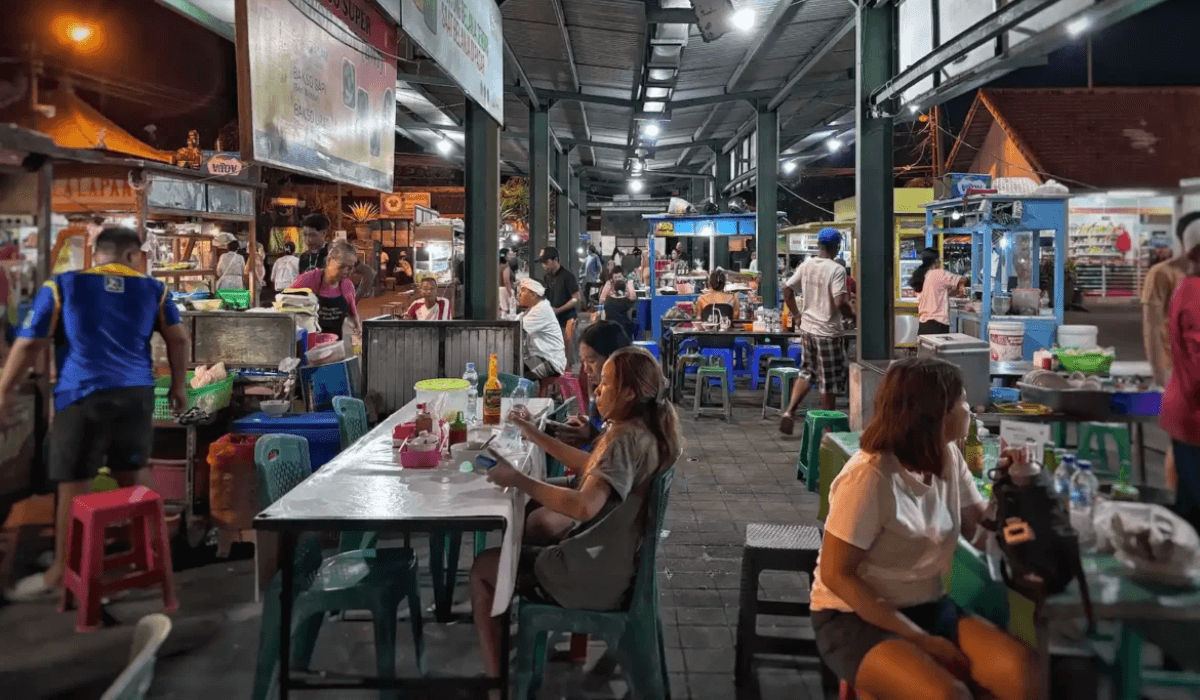
By the time the sun drops behind Sanur’s mellow beach bars, a line of warungs on Jalan Danau Tamblingan clicks to life and you can smell the charcoal before you see the lights. The layout feels almost “organized” by Bali standards—neat rows of tables, proper rubbish bins, even hand-wash sinks—so families and scooter-strapped surfers can graze without elbow battles. Doors go up around 5 p.m., and the place is humming by six; anything you want to try, grab before the 10 p.m. wind-down bell because vendors really do pack it in on time.
Start with the stall fanning sate lilit—minced fish wrapped round lemongrass sticks, smoky and just 15 k-25 k IDR a portion. Follow with a plate of laklak coconut pancakes or a plastic cup of fresh dragon-fruit juice if the heat still lingers. Everything is cash-only, so break your big notes beforehand, and skip haggling on food—the printed menus are firm. It’s an easy 10-minute stroll from most Sanur guesthouses; roll up in flip-flops, order whatever’s sizzling loudest, and settle in to watch holiday-makers and locals trade gossip over bowls of steaming bakso. Cheap, clean, and low-stress: Sindhu is Bali’s night-market training wheels done right.
3. Kuta Art Market (Kuta Beachfront)
- Hours: Shops open all day; street-food carts roll in from sunset to 10 pm.
- Scene: Tourist-heavy, but unbeatable for post-surf souvenir hunts.
- Eat first: Nasi goreng or corn-on-the-cob elotes by the sea wall.
- Pro tip: Haggle hard—most stalls stock identical sarongs and tees.
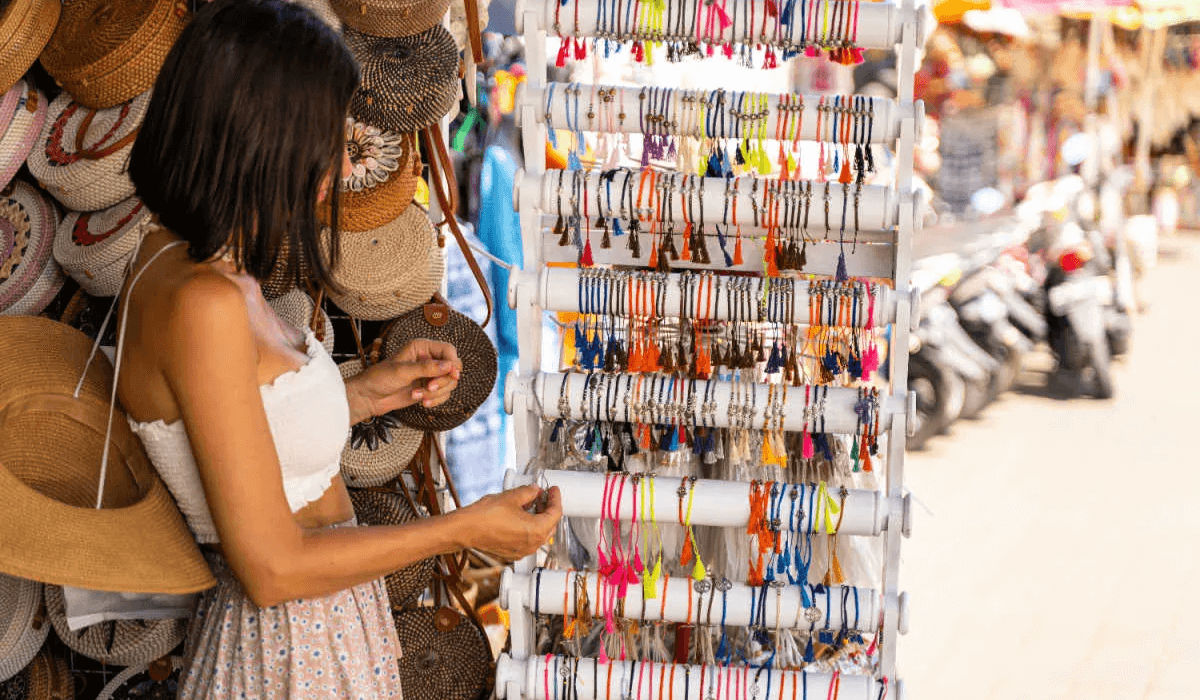
Kuta Art Market sits steps from the beach on Jalan Bakung Sari, and it flips personality the moment the sun slips behind the surf. Spend the afternoon ticking off temples on a UNESCO World Heritage Sites tour, then swing by around 5:30 p.m. when hawkers wheel in hibachi grills and the strip re-brands as “Kuta Night Market.” The stalls glow under bare bulbs until roughly 10 p.m.—late enough for a post-surf snack yet early enough that families still feel comfortable wandering with kids.
Follow your nose to the seafood corner first: snapper fillets and prawns hit the coals, brushed with chilli-butter and served on wax paper for a few coins. If flames and fish aren’t your thing, vendors dish out quick nasi goreng, grilled corn slicked in kecap manis, and satay skewers so cheap you’ll double-order without guilt. Prices run 15–40 k IDR, cash only. Haggle on souvenirs, not on food—the menu boards are non-negotiable. GoJek riders can hop off at the entrance; drivers know it as “Pasar Seni Kuta.” Pocket small bills, expect smoke-in-your-hair vibes, and treat it as Kuta’s budget after-party before the clubs open.
4. Badung Night Market (Denpasar)
- Hours: Vendors fire up after 6 pm; most stalls lit until midnight.
- Scene: Two-level riverside complex; groceries upstairs, 100-plus food kiosks below.
- Eat first: “Sate Godzilla”—foot-long chicken skewers dripping in peanut sauce.
- Pro tip: Multi-storey car park across Jalan Sulawesi costs 5 k IDR/hour—keep the ticket safe.
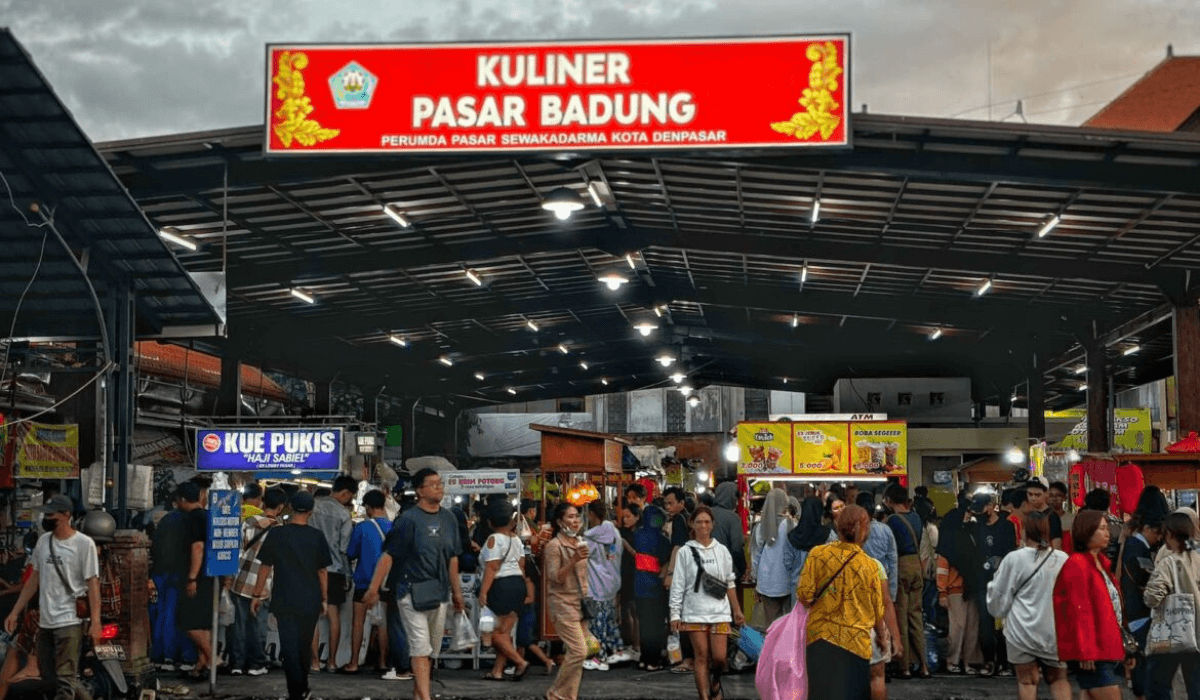
Tucked beside the Badung River and facing Kumbasari Art Market, Pasar Badung sheds its “produce-by-day” skin around 6 p.m. when the ground-floor food court flips on every neon tube at once. Four levels of stalls loom overhead, but the action is all street-level: families scouting dinner, students on scooter dates, and chefs grabbing late-night spices under the glow of red-and-green LEDs. The remodel after the 2019 fire left wider aisles and a riverside deck, so you can wander without shoulder-checking every two steps. Official closing time is “midnight,” yet vendors hang around as long as bellies are empty and stock’s still hot.
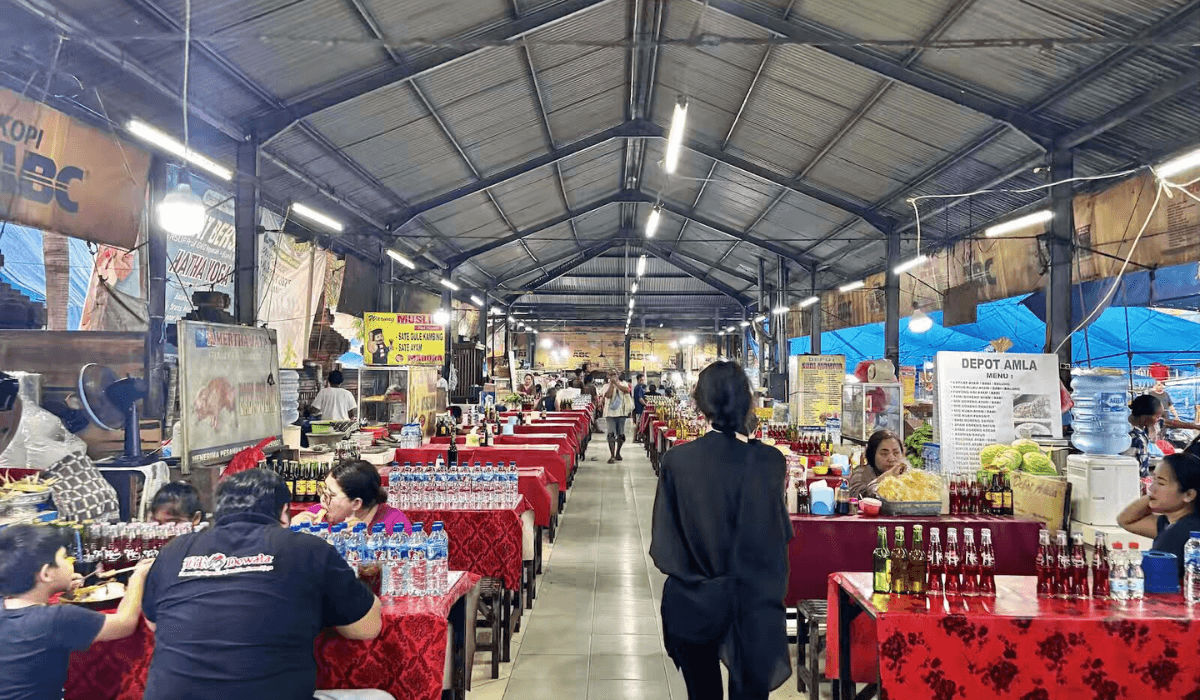
Start at the “Kuliner Pasar Badung” row—forty-odd carts shoulder-to-shoulder—for steaming bowls of bakso, foot-long “Sate Godzilla,” and plates of surabi coconut pancakes, all 10-25 k IDR a hit. Portions are small on purpose, letting you graze five or six stalls before surrendering. Bring cash in 10 k notes, wipe your table with the free sanitizer, and skip the multi-storey car park drama by hopping a GoJek from Seminyak (about 30 minutes off-peak). When the vendors douse their charcoal and the river breeze finally cuts the heat, you’ll realise you just ate like a king for the cost of a Canggu latte.
5. Kreneng Night Market (Denpasar)
- Hours: 24/7 site; transforms into a food court from 6 pm.
- Scene: No-frills, neon-bright, beloved by locals for bulk fruit after dark.
- Eat first: Bakso meatball soup and nasi jinggo (rice parcels) at Rp 5 k each.
- Pro tip: Come hungry—portions are small so you can sample a dozen stalls.
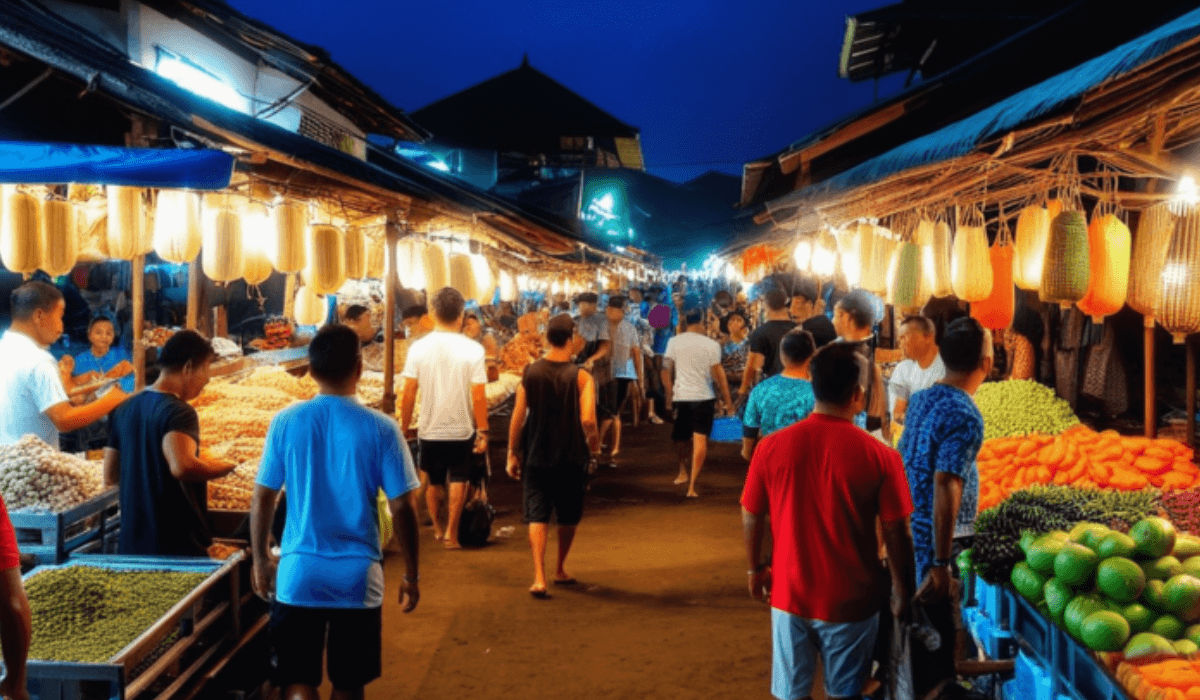
By daylight Kreneng is a no-nonsense bus hub and produce bazaar, but once the clock nudges past 6 p.m. the minibuses grow scarce and the asphalt erupts into a neon sprawl of food carts, fruit piles, and bargain clothes racks. Locals call it “Pasar Kreneng”; travellers often stumble in after hearing it’s the cheapest place in town—and that’s true. The market technically runs 24 hours, yet the night vibe peaks between 6 p.m. and 11 p.m., when every alley smells of sizzling chicken skin and clove smoke and the soundtrack is a mash-up of scooter horns and stall-holders calling out one-word menus.
Come hungry and cash-ready. A bowl of bakso or soto ayam costs around 10-15 k IDR; lemongrass-skewered sate lilit, martabak telur, and nasi jinggo rice packets rarely top 20 k. Portions stay snack-size so you can graze five stalls before you’re full, and nobody accepts cards, so split those 50 k notes beforehand. If you’re staying in Seminyak or Canggu, a GoJek bike will get you here in 25–30 minutes—far simpler than navigating the multi-storey car park. Wander, taste, repeat, and watch Denpasar’s everyday nightlife unfold for the price of a single beach-club cocktail.
6. Jimbaran Fish Market (Kedonganan)
- Hours: 6 am – 9 pm; grills hit full roar 5–8 pm (sunset).
- Scene: Plastic-chair warungs curb-side-grill your purchase for a modest fee.
- Eat first: 1 kg red snapper, butterflied and chilli-brushed, shared family-style.
- Pro tip: BYO cold drinks—market cool-boxes only stock tepid sodas.
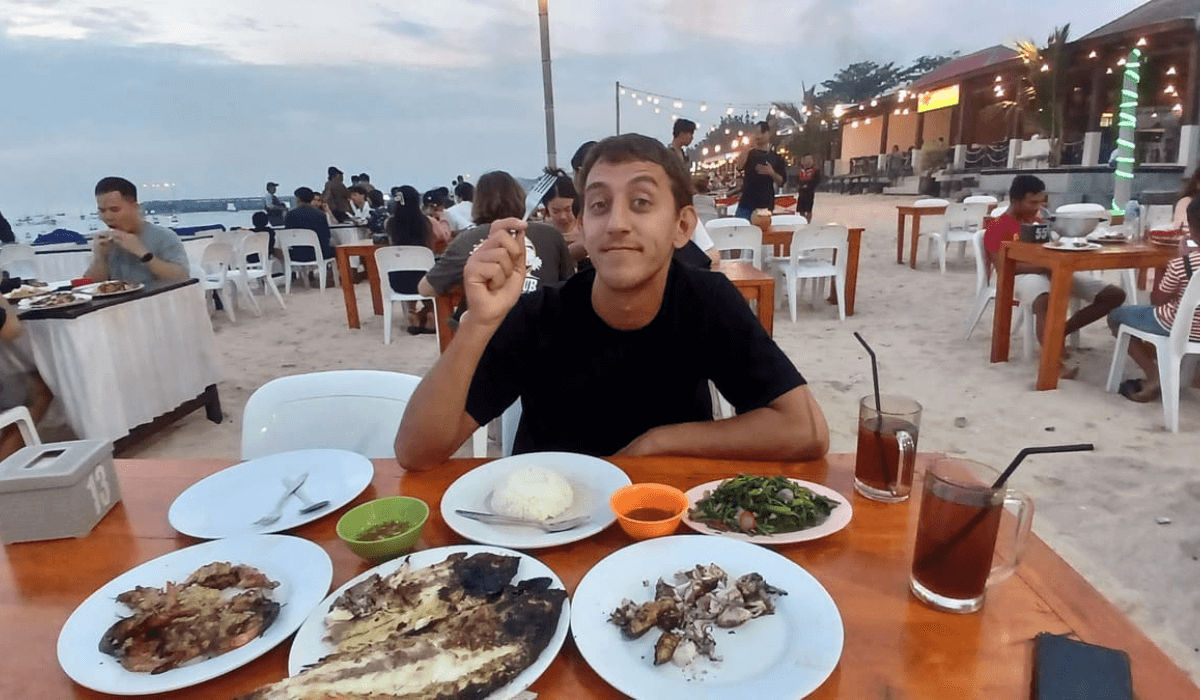
By late afternoon the wet market’s concrete floor is slick with melted ice and bargaining chatter, but the real magic kicks in once fishermen drag the last cool-boxes off their trucks. Around 5 p.m. the beach-side warungs fire up drum grills, the air turns smoky-sweet with chilli butter, and diners elbow in to claim plastic tables facing the sunset. It’s only 15 minutes by Grab from Kuta—longer if you hit rush-hour traffic—so aim to arrive before the sky blushes orange and you’ll watch the bay trade workday bustle for open-air barbecue theatre.
Grab a kilo of red snapper or prawns inside (expect 90-130 k IDR a kilo), hand it to any warung on the lane, and they’ll marinate, grill, and plate it with rice for about 15-20 k IDR per kilo—cash only, pay both the fishmonger and cook separately. Portions vanish fast after 7 p.m., parking is scarce, and scales aren’t always your friend, so keep small bills handy, watch the weigh-in, then kick back under the fairy lights while the tide and a side of sambal do the talking.
7. Garlic Lane Street Market (Legian)
- Hours: Roughly 10 am – 8 pm; most stalls fold early if trade is slow.
- Scene: Souvenir strip with a sprinkle of warungs at the south end after dark.
- Eat first: Late-night bakso cart parked beside Mini-Mart.
- Pro tip: Look for the few “fixed-price” shops to benchmark your bargaining.
Slip off bustling Jalan Legian onto narrow Jl. Sahadewa and you hit Garlic Lane—the island’s most tourist-friendly “night market.” By late afternoon souvenir shops are flipping on bare-bulb lights, reggae drifts from open-front bars, and the pavement turns into a slow-moving catwalk of holiday-makers bargaining for one-last-tee before dinner. Most stalls trade all day, but the after-dark sweet spot is 6-8 p.m.; by 9 many shutters roll down, leaving the cafés and beer joints to carry the noise.
Come with small notes and two missions: shop fast, snack slow. Almost every stand stocks the same batik dresses, knock-off jerseys, and wooden carvings, yet the allure is the haggle—some outlets even post “fixed-price” signs so you can skip the dance altogether. When hunger bites, grab a bowl of bakso from a roaming cart or duck into Garlic Lane Restaurant for cheap nasi goreng and happy-hour cocktails while drag performers work the mic. It’s kitschy, convenient, and open just late enough to warm you up for Kuta’s club scene—or wind you down with a Bintang before bed.
8. Taman Sari Night Market (Kerobokan)
- Hours: 5 am – midnight, daily.
- Scene: Produce bazaar by day; lantern-lit satay alley by night.
- Eat first: Satay ayam (five-stick plates) and fresh-pressed sugar-cane juice.
- Pro tip: Cash only—nearest ATM is a five-minute walk on Jl. Raya Semer.
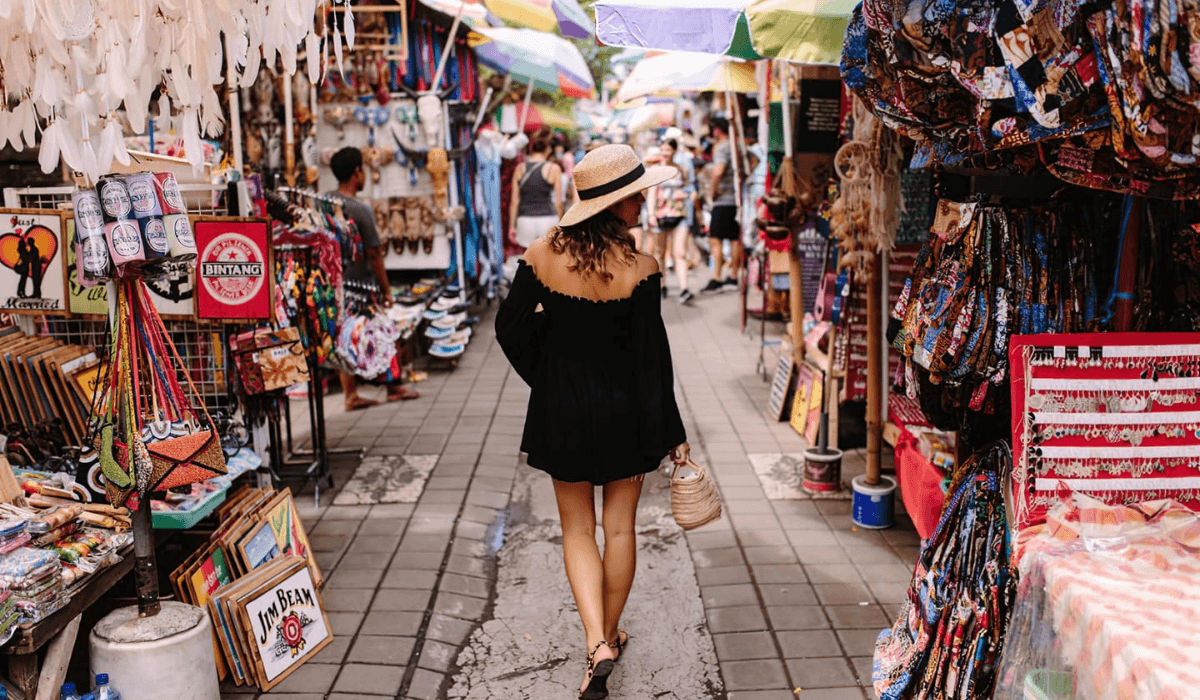
Taman Sari Night Market sits on Jalan Tangkuban Perahu in Kerobokan, and it morphs from a laid-back produce bazaar to a lantern-lit street-food alley as dusk rolls in. Pair it with an afternoon Bali Instagram Foodie Experience shoot, then roll up around 5 p.m. when families from Canggu and villa staff from Seminyak drift through the tiled aisles, bargaining over mangoes before turning their attention to sizzling grills. The vibe is friend-of-a-friend casual: no tour buses, just locals, a handful of expats, and the chatter of vendors swapping jokes across fruit pyramids.
Grab a plastic stool and start with a steaming bowl of bakso (meatball soup) or a plate of smoky sate ayam—both hover around IDR 10–20 k, so keep a stack of small bills handy. Fresh dragon-fruit juice makes a sweet palate reset before you dive back in for nasi goreng or a skewer of grilled chicken skin. Cards aren’t a thing here, and neither is haggling on cooked food; save the negotiating for fruit kilos if you’re stocking the villa fridge. A 10–15-minute GoJek ride from Seminyak drops you at the entrance—easy in, easy out, with a belly full of street-food gold and change to spare for tomorrow night’s market run.
9. Pasar Senggol (Nusa Dua, Grand Hyatt)
- Hours: 6 pm – 10 pm buffet & cultural show.
- Scene: Upscale, ticketed, theatre-style seating under the stars.
- Eat first: Unlimited babi guling, lobster, and sate lilit from live stations.
- Pro tip: Book online to snag early-bird discounts and front-row seats for the Legong dance.
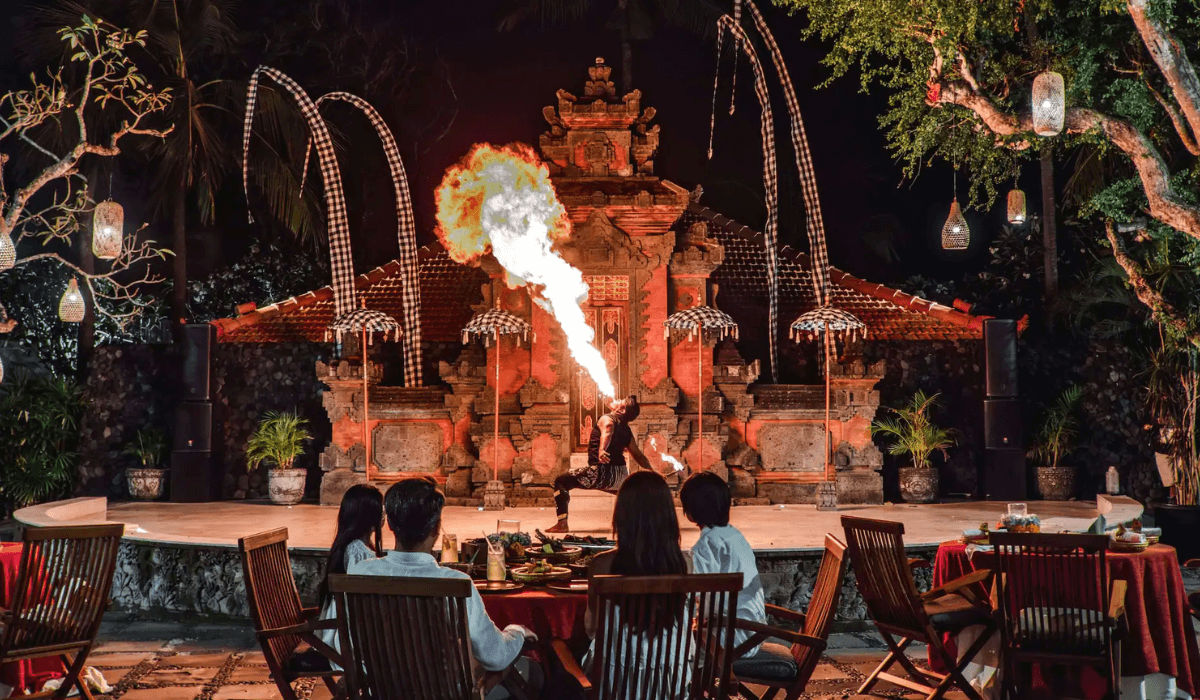
Suppose an open-air amphitheatre tucked inside the Grand Hyatt’s gardens: tiki-torches flicker, gamelan musicians tune up, and food stalls circle the stage like a movie set of “Bali in one bite.” Pasar Senggol isn’t your gritty street corner—it’s a curated night-market-meets-buffet that runs Thursday to Sunday, roughly 6 p.m.-10 p.m., with a full Balinese dance show starting once plates are loaded.
Pay the fixed buffet fee (about IDR 350 k-400 k, kids half-price) and you can bounce between stations carving babi guling, skewering sate lilit, grilling lobster, or folding tiny banana-leaf desserts; no haggling, no cash juggling—just grab what you want and head back to the amphitheatre benches.
Book online for a small discount and show your voucher at the resort gate; outside guests are welcome but security will scan IDs. Dress code is “smart-casual flip-flops,” and Grab cars know the drop-off as “Grand Hyatt Bali, Pasar Senggol.” Skip if you crave backpacker prices, but if you want culture, comfort, and an eat-till-you-drop spread under the stars, Senggol is Bali’s most polished pasar malam experience.
10. Klungkung Senggol Market (East Bali)
- Hours: 4 pm – 10 pm.
- Scene: Authentic “bump market” where locals elbow through narrow aisles.
- Eat first: Serombotan—a spicy, coconut-laced veggie mix unique to Klungkung.
- Pro tip: Prices here are the lowest on the island—stock up on woven baskets and palm-sugar cakes.
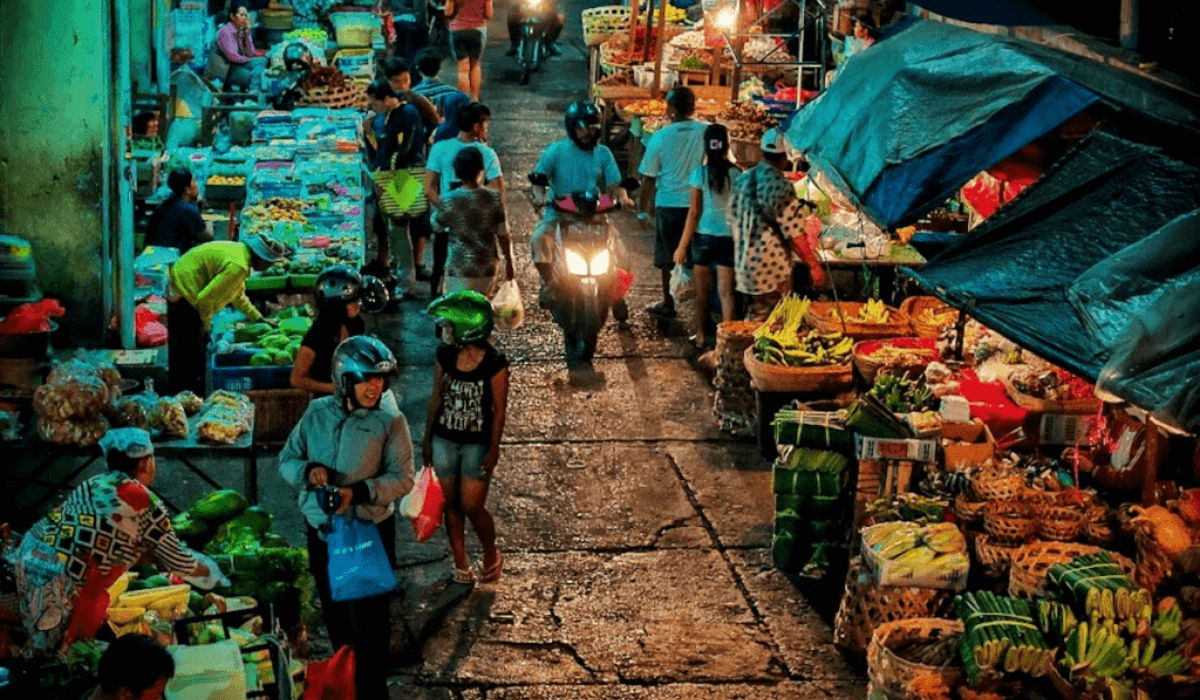
Hidden in Semarapura—the old royal capital—this “bump market” (the word senggol literally means jostle) fires up around 4 p.m. and winds down by 10 p.m. Narrow lanes glow under naked bulbs, radio pop competes with scooter horns, and the crowd is almost entirely local—farmers from nearby rice terraces, students in uniform, families scooping takeaway dinners. It’s a 45-minute drive from Sanur or about an hour from Ubud, so time your arrival for sunset; that’s when grills are hottest and the stone-gate entrance still has breathing room.
Food is the whole agenda, and prices hover between IDR 10 k and 20 k a hit. Start with serombotan, Klungkung’s signature coconut-laced veggie salad, or grab paper cones of tipat tahu—rice cake and tofu drenched in sweet-spicy peanut sauce. Lamb satay smokes on one corner, while another stall carves crackling babi guling; a few steps away, thick slabs of gooey chocolate-cheese martabak finish the job. Cash only, no bargaining on food, and small notes make life easier. When the lamps dim and the last bowls of meatball soup slosh onto plastic trays, you’ll have tasted a slice of Bali that most beach-bound tourists never find.
What to Eat & Buy at Bali’s Night Markets
Iconic Street Foods (order these first)
Dish | What it is | Where it shines |
Babi Guling | Whole suckling pig, spice-stuffed and spit-roasted; crisp skin, juicy meat. | Gianyar, Kreneng, Pasar Senggol buffets |
Sate Lilit | Minced fish or pork wrapped round a flat lemongrass stick, charcoal-grilled. | Sindhu, Jimbaran, Badung |
Serombotan | Blanched veggie mix slathered in spicy coconut-peanut sauce—vegan-friendly. | Klungkung Senggol, Badung |
Martabak Manis | Fluffy pan-cake folded with butter, chocolate, peanuts, or cheese. | Late-night carts at Kuta & Legian |
Jaje Bali sweets | Sticky rice cakes dyed with pandan or palm sugar; bite-size dessert. | Any stall with a glass “kue” case |
Bakso | Beef or chicken meatball soup, often with noodles and chilli vinegar. | Kreneng, Garlic Lane |
Souvenirs That Travel Well
Item | Why buy it | Typical price |
Batik or Ikat Scarves | Hand-dyed cotton; doubles as beach wrap or table runner. | 40 k–120 k IDR |
Wood Carvings | Masks, animal figurines, or spoon sets from suar or teak. | 50 k–250 k |
Silver Jewellery | Intricate Celuk-made rings, earrings, cuffs—925 stamped. | 70 k–400 k |
Kopi Luwak Sachets | The famed civet-processed coffee in 50 g packs. | 90 k–150 k |
Snake-Fruit (Salak) Chips | Crunchy, sweet-tart local snack; lightweight and durable. | 20 k–30 k per 200 g |
Natural Spa Products | Coconut-oil soaps, frangipani balms, volcanic-scrub sachets. | 15 k–60 k each |
Local Etiquette & Bargaining Cheatsheet
- Open at 50 % of the first price. Vendors expect the dance; starting around half gives both sides room to land near 65-70 %.
- Smile, keep it friendly, walk away politely. A cheerful “Terima kasih, mungkin nanti” (“Thanks, maybe later”) often brings a last-minute discount.
- Bundle buys. Combine two or three items—“berapa kalau dua?” (“how much for two?”)—to shave another 5-10 %.
- Pay cash in small notes. Handing over 100 k notes slows the deal and may kill the vibe.
- Cover up outside the beach. Shoulders and mid-thigh are the minimum; temples require a sarong & sash for everyone—no excuses.
- Use your right hand to give money or receive food. The left is considered impolite.
- Don’t point with your index finger. Gesture with an open hand instead.
- Mind the head. Patting children—or anyone—on the head is taboo.
- Keep PDA low-key. A quick photo kiss is fine; full-on cuddles draw stares.
- Ask before snapping portraits. A smile and “Boleh foto?” (“May I take a photo?”) go a long way.
FAQs — Bali Night-Market Need-to-Knows
Q1. Are Bali’s night markets safe for solo travelers after dark?
Generally, yes—stick to well-lit areas, keep valuables zipped, and use a metered taxi or ride-hail to get home. petty theft is the main risk but violent crime is rare.
Q2. I’m vegetarian/vegan—will I find food?
Absolutely. Stalls at Sindhu and most Denpasar markets label meat-free dishes (tempeh satay, gado-gado, fried tofu). Vendors are happy to leave meat off mixed-rice plates if you ask.
Q3. Do markets close for Galungan or Kuningan?
Many family-run stalls shut early—and a few skip the day entirely—so plan to eat before 6 pm. In 2026 Galungan falls on 23 Apr and 19 Nov; Kuningan is 3 May. Larger tourist venues (Kuta, Nusa Dua) stay open.
Q4. Is haggling expected at food stalls?
Bargaining is normal for souvenirs and clothing but not for cooked food—prices are already rock-bottom. If a dish isn’t marked, ask the price first; most vendors quote a fixed, locals-pay rate.
Q5. Can I pay with cards or e-wallets?
Bring cash. Markets are “cash first, QR code second.” A few bigger stalls at Sindhu now take Indonesia’s QRIS mobile payments, but credit/debit terminals are almost unheard of.
Recommended Articles
- Destinations

Best Waterfalls in Bali: A 2-Day Itinerary
- Destinations

Top 7 Things to Do in Bali
- Tips

Travelling Solo in Bali: Safe & Thrilling Adventures Await (2026)
- Resources
What to Buy in Bali? Top 25 Authentic Balinese Souvenirs and Gifts You Must Buy
- Destinations

Top 15 Famous Temples in Bali You Must Visit (+ Guide & Tips)
- Resources

Traditional Balinese Massage in Bali: A Traveler’s Guide
- Travel Inspiration

Bali Off the Beaten Path: 10 Hidden Gems & Unique Experiences
- Tips
Top 10 Scuba Diving Sites in Bali: Best Locations, Costs & Travel Guide
Get your VACATION on!
Expertly curated emails packed full of vacation inspiration, travel tips and more!