


 +1 617 404 2125


Mount Ijen Tour & Guide: Blue Fire, Routes & Safety


BY Jess Leak
13 days ago


Mount Ijen is a volcanic destination in East Java, Indonesia—not on Bali. Its turquoise crater lake and rare blue flames draw hikers from Banyuwangi and across the Bali Strait. The journey, night hike and park rules take planning, so use this guide to understand the route, what you may see, and how to prepare safely. The blue fire is a natural phenomenon, but it is never guaranteed.
Our Best Selling Tour
- All-Inclusive
- Mount Ijen: Electric Blue Fire Tour(21 Reviews)
Our Mount Ijen Electric Blue Fire Tour is like nothing you've ever experienced, it absolutely has to be on your Bali bucket list! This is an all-inclusive 2-day...
US$229/pp Learn more
Considering the trip? Compare our Mount Ijen Electric Blue Fire Tour with the Ijen and Mount Bromo volcano adventure. Tour details, pickup areas and inclusions vary, so confirm them for your travel date.

At a glance: Mount Ijen visitor information
- Where it is: East Java, across Banyuwangi and Bondowoso regencies.
- Usual hiking entrance: Paltuding.
- Gate hours listed by the park: 02:00–12:00 Western Indonesia Time (WIB), as checked 17 October 2026. Entry and access within the area remain subject to current instructions.
- Current entry preparation: The official visitor page asks hikers to bring a medical certificate issued no more than three days before the visit, wear slip-resistant shoes and warm clothing, and carry a mask. It says people with a history of heart disease, asthma, respiratory infections or breathing disorders are not recommended to hike.
- Closures: The park lists scheduled 2026 conservation closures and says weather, volcanic activity, field conditions or management decisions can also close the area. The remaining listed dates for 2026 are 6 November and 4 December, according to the notice checked on 17 October.
Rules can change, and a ticket or tour booking does not guarantee that a particular trail section or the blue-fire viewing area will be open. Before you travel, recheck the official Kawah Ijen visitor information and ticket page. The park reopened on 28 September 2026 after a wildfire-related closure, and access can be suspended again when safety conditions require it.
How to get there and when to go
Kawah Ijen lies in East Java. Banyuwangi is a practical base for reaching Paltuding by road; visitors arriving from Bali must account for the drive to Gilimanuk, the ferry to Ketapang, and a separate onward transfer to the mountain. The ferry crossing is only one leg of that journey. Queues, sea conditions, road travel and the pickup point can make the total trip much longer than a simple ferry estimate.
For flights, compare schedules into Banyuwangi with connections through Surabaya or Bali, then plan the ground transfer separately. Do not assume that the nearest or most convenient airport has a suitable flight on your date. Travelers using Ngurah Rai can read our guide to Bali’s Ngurah Rai International Airport, but should allow time for the drive and ferry transfer to Java.
Ask your accommodation or tour operator to confirm the exact pickup location, transport type, ferry arrangement, ticket process, entry slot and return plan. A private Mount Ijen tour can simplify multiple transfers, while an independent stay in Banyuwangi may give you more flexibility to rest before and after the hike. For broader trip planning, see our Mount Ijen guide and Bali tours.
Weather at the mountain can differ from conditions at your Bali hotel. Rain, wind, poor visibility, volcanic activity and conservation work may affect access at any time of year. Check current park notices and local conditions close to departure rather than relying on a Bali dry-season calendar as a forecast for the summit.

Kawah Ijen Crater
Kawah Ijen is part of the Ijen volcanic complex, a landscape of volcanic cones, crater lakes and lava features. The crater lake’s vivid color and unusual chemistry make it striking, but this is an active volcanic environment—not a swimming or casual exploration area. The Ijen area is recognized as a UNESCO Global Geopark; learn more from UNESCO’s overview of Ijen’s geological heritage.
The hike is steep and can be strenuous, particularly in darkness and at altitude. Your experience depends on pace, weather, trail conditions and the sections currently permitted. Ask your operator about the route, expected walking time, terrain, guide arrangements and a plan for turning back if you feel unwell. Do not treat a generic itinerary as a promise of access to the crater floor.

Blue Fire
The blue flames are produced when sulfur-rich volcanic gases emerge and ignite on contact with oxygen. The phenomenon is most visible in darkness, but visibility depends on conditions, and park authorities may restrict access to the area. A blue-fire sighting is not guaranteed. The flames are not simply a product of sulfur mining, and no tour can promise a particular display or photograph. UNESCO describes the phenomenon and its geological setting in its Ijen Geopark profile.
Volcanic gases can be hazardous. Stay with your guide, remain within the permitted route, and follow every instruction from park staff. A basic face mask does not make it safe to approach a gas plume. If access is restricted or conditions change, skip the blue-fire area and follow the official direction.

Blue fire at Mount Ijen, East Java
Acid Lake
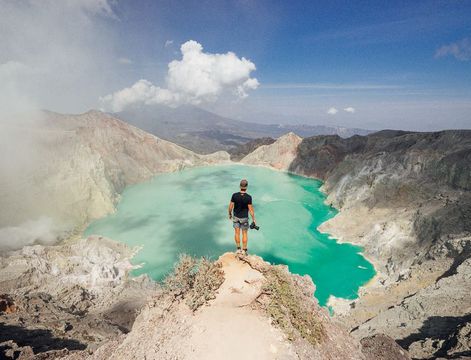
Ijen’s crater lake is intensely acidic and should be treated as a serious natural hazard. Do not swim, wade, touch the water, or leave the authorized route to approach it. Keep a safe distance from the crater edge and any gas emissions, and follow the guide and park instructions. The lake’s striking appearance is best admired from a permitted viewpoint.
For more on the site and its visitor areas, see our Mount Ijen destination page and Mount Ijen guide.

Our Top Trending Tours
-
All-Inclusive
-
All-Inclusive

-
All-Inclusive
The Best Mount Ijen Tour Itinerary
There is no single reliable timetable for every Mount Ijen trip. The example below is a planning sequence, not a guaranteed schedule. The park’s visitor page lists gate hours beginning at 02:00 WIB; your confirmed ticket, entry instructions, weather and guide will determine the actual start and route.
- Before the hike: Stay near your departure point if possible, sleep in advance, confirm the ticket and medical-certificate requirements, and check the park status.
- Transfer to Paltuding: Arrange a driver or tour transfer in advance. From Bali, build in the Bali road leg, ferry crossing, queues and the Java transfer; discuss an overnight plan rather than assuming a short day trip.
- Enter when authorized: Follow the assigned entry process and the guide’s briefing. Use a headlamp or flashlight and stay with your group.
- Hike and view only permitted areas: The guide will advise what is open and safe. Blue fire may not be visible or accessible.
- Return carefully: Descend with your group, allow time to rest, and leave enough buffer for the road and ferry if returning to Bali.
Exact pickup and return times depend on your hotel, transport, ferry, pace, park rules and conditions. Confirm what meals, equipment, tickets and transfers are included directly with the operator. Compare the Ijen–Bromo adventure if you want a longer East Java itinerary.

View from the Mount Ijen summit
What to bring
- Slip-resistant hiking shoes: Choose footwear with a secure fit and grip for uneven ground.
- Warm layers: Night and pre-dawn conditions can feel cold. Bring a windproof or waterproof outer layer and check the forecast.
- Headlamp or flashlight: Keep both hands available on a dark trail; bring spare batteries if appropriate.
- Water and a small snack: Carry enough for the hike and follow your guide’s advice about food and waste.
- Mask and any required personal gear: The park lists a mask among visitor equipment. It does not protect you from every volcanic gas hazard; never use it as a reason to approach fumes.
- Medical certificate and identification: Check the current official requirements and ensure the certificate is within the stated validity period.
For Bali-specific seasonal packing ideas, see our Bali wet-season packing guide. Ijen’s mountain weather can differ, so pack for the conditions forecast at the trailhead as well.

Mount Ijen crater lake view
Other tips
- Choose an itinerary that leaves time to sleep and recover; a night hike followed by a long road-and-ferry transfer can be exhausting.
- Confirm ticket requirements, operating hours, closures, guide arrangements and what the tour price includes before paying.
- Stay with your guide and group, keep to marked routes, and turn back if you feel unwell or conditions worsen.
- Respect local residents and sulfur miners. Give workers room on the path and ask before taking close-up photographs.
- Take your rubbish back with you and follow the Geopark’s conservation guidance.
- Have a backup plan in case weather, volcanic activity, fire response or park management closes the area.

Visitors overlooking the Mount Ijen crater lake
Tips for the Hike
- Check the official park notice and ticket status again shortly before departure.
- Carry the required health document, identification, warm clothing, slip-resistant footwear, a light and water.
- Tell your guide promptly if you experience breathing difficulty, dizziness, nausea or other concerning symptoms; follow their instructions and leave the area if directed.
- Do not touch the crater lake or approach sulfur gases, even briefly.
- Keep expectations flexible: views, sunrise conditions and blue-fire access can change.
If you want to compare volcano experiences elsewhere in Bali, explore the Mount Batur sunrise 4x4 jeep expedition, the Mount Batur sunrise hike and hot-spring tour, Mount Bromo, or Mount Agung. You can also browse our Southeast Asia attractions guide.
Ready to plan the trip? Review the inclusions and pickup details for our Mount Ijen Electric Blue Fire Tour and compare them with the route and timing that work for you. Explore more Bali tours if you are building a longer itinerary.
Mount Ijen Visitor Questions
Is Mount Ijen in Bali?
No. Mount Ijen is in East Java, within the Ijen volcanic complex between Banyuwangi and Bondowoso. Visitors starting in Bali need to travel to Gilimanuk, cross the Bali Strait by ferry to Ketapang, and continue by road to the Paltuding trailhead. The ferry is only one part of the journey: queues, road transfers, weather, and the chosen pickup point affect the total time. Confirm the route and overnight plan with your operator before setting out, especially if you expect to return to Bali after the hike.
Can I see the blue fire on every visit?
No. Blue fire is produced when sulfur-rich volcanic gases ignite after they reach the air; the flames are most visible in darkness. Visibility varies with weather and local conditions, and authorities may close the viewing route because of volcanic activity or safety concerns. Even if the hike is open, a clear sighting is never guaranteed. Stay on the authorized path and follow your guide and park staff rather than approaching fumes or trying to reach a different viewpoint.
What time does the Ijen hike start?
The park visitor information currently lists the hiking gate opening at 02:00 WIB, but the exact entry process and route depend on your ticket, park instructions, and conditions on the day. Check the official notice shortly before you go, because access hours and trail restrictions can change. If you are traveling from Bali, plan the road and ferry transfers separately and consider staying near the trailhead so you are rested; do not assume that a late Bali departure will get you to the gate on time.
Do I need a medical certificate?
The park visitor page currently asks hikers to present a doctor’s health certificate issued no more than three days before the visit. Check the official page before travel for the latest format and submission instructions, and make sure the document meets the validity window for your visit date. The park also says people with a history of heart disease, asthma, respiratory infections, or breathing disorders are not recommended to hike. If you are unsure whether a strenuous night hike is suitable for you, discuss it with a qualified health professional before booking.
Is the crater lake safe to touch?
No. The crater lake is highly acidic, and the surrounding crater is an active volcanic environment with steep edges and potentially hazardous gases. Do not touch, swim in, or wade into the water, and do not leave the authorized route to get closer. Keep away from the crater rim and any fumes, stay with your guide, and follow park staff instructions immediately if an area is restricted or conditions change. The lake is safest to appreciate from a permitted viewpoint.
Official sources and last updated
- Kawah Ijen official visitor page — operating hours, 2026 closure notice, visitor requirements and ticket information.
- UNESCO Ijen Global Geopark — geological setting, crater lake and blue-fire phenomenon.
- Banyuwangi Regency government update — reopening notice dated 26 September 2026 following the wildfire-related closure.
- Ministry of Forestry ticketing announcement — official e-ticketing platform context.
Last reviewed: 17 October 2026. Park information can change. Confirm access and safety instructions with the official park manager before departure.
Recommended Articles


Get your VACATION on!
Expertly curated emails packed full of vacation inspiration, travel tips and more!